Quantum-Proof Your Crypto: 2026 Hardware Wallet Guide
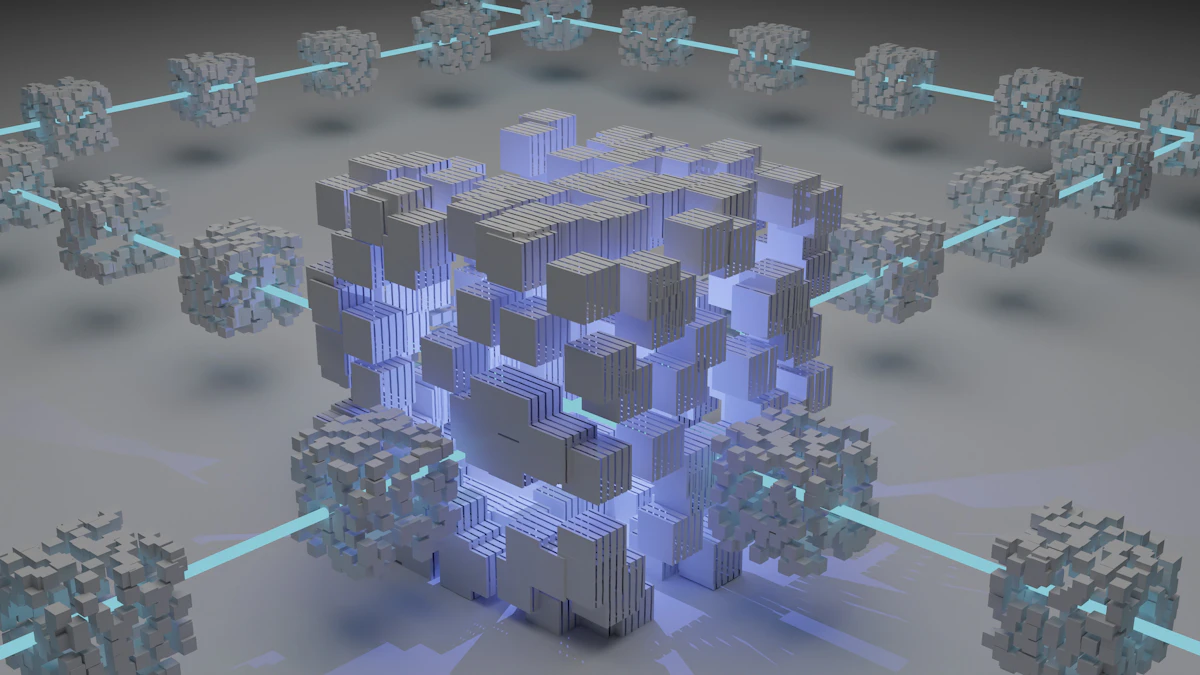
Introduction: The Emerging Threat of Quantum Supremacy
Welcome here! Today, we are diving deep into the most critical evolution in the history of digital finance. In this post, we will talk about the unprecedented threat of Quantum Computing to blockchain security. We will discuss how the rapid advancement in quantum processors has forced the crypto community to rethink the safety of cold storage and why your 2026 security strategy must go beyond traditional seed phrases. This is not just a theoretical concern anymore; it is a battle for the survival of decentralized wealth.
For over a decade, the crypto world has relied on the mathematical complexity of Elliptic Curve Cryptography (ECC) to protect billions of dollars in assets. However, as we move through 2026, the concept of "Quantum Supremacy"—the point where a quantum computer can outperform the world's best supercomputers—is no longer a theoretical debate; it is a technical reality. A quantum computer utilizing Shor’s Algorithm can essentially reverse-engineer a private key from a public address, rendering traditional hardware wallets like Ledger and Trezor vulnerable if they are not updated to the latest standards. This guide is designed to provide you with a high-level, technical framework to protect your wealth before the "Quantum Apocalypse" strikes, ensuring that your generational wealth remains untouched by future computational leaps.
Expert Analysis: Cybersecurity in the AI Era — Discover how the synergy between AI and Quantum computing is creating a new breed of automated hacking tools that target decentralized wallets.
The Technical Breakdown: Why Traditional Cryptography is Failing
To understand how to protect yourself, you must first understand the vulnerability at a fundamental level. Most modern blockchains, including Bitcoin and Ethereum, use the ECDSA (Elliptic Curve Digital Signature Algorithm). On a classical computer, trying to guess a private key would take billions of years, making it practically impossible. However, a quantum computer works with "Qubits," which exist in multiple states simultaneously through superposition. This unique property allows them to perform Shor’s Algorithm, which can factor large prime numbers—the very foundation of our current encryption—at an exponential speed that makes current security look like child's play.
This technological shift means that any public key visible on the blockchain (which happens every time you make a transaction) could potentially be "cracked" by a quantum adversary. In 2026, hackers are already utilizing "Harvest Now, Decrypt Later" strategies. They are recording and stealing encrypted blockchain data today, patiently waiting for the moment quantum power becomes cheap and accessible enough to unlock those keys. This makes the immediate transition to Post-Quantum Cryptography (PQC) the most urgent and non-negotiable task for any long-term investor or "HODLer" who intends to keep their assets secure for the next decade.
Advanced Protection Strategies for Hardware Wallets in 2026
1. Implementing Lattice-Based Cryptography
The most promising and mathematically sound defense against quantum attacks is Lattice-Based Cryptography. Unlike ECC, which relies on the difficulty of discrete logarithms, lattice-based math involves finding the shortest vector in a high-dimensional grid—a problem that remains incredibly complex even for quantum computers. In 2026, leading hardware wallet brands have started integrating NIST-standardized algorithms like CRYSTALS-Dilithium into their secure chips. Upgrading to a device that supports these PQC signatures is no longer a luxury; it is your primary line of defense in an increasingly sophisticated digital battlefield.
2. The Power of "True" Air-Gapped Cold Storage
Connectivity is the ultimate enemy of long-term security. In an era where quantum-enhanced malware can sniff out USB handshakes and Bluetooth signals, Air-Gapped wallets have become the gold standard. These devices use QR codes or micro-SD cards to sign transactions, meaning the private keys never leave the physical hardware and are never exposed to an internet-connected environment. By keeping your hardware wallet physically and digitally isolated, you eliminate the very bridge that a quantum hacker would need to reach your assets, ensuring that your keys remain in a "dark" environment at all times.
3. Multi-Algorithm Multi-Signature (MAMS) Strategy
Relying on a single brand of hardware or a single cryptographic algorithm is a dangerous "Single Point of Failure." In 2026, savvy investors and institutions use Multi-Sig setups with different cryptographic backends. For example, you might have a 3-of-5 signature requirement where two keys are stored on traditional ECDSA wallets and three keys are stored on newer, quantum-resistant lattice-based wallets from different manufacturers. This diversified approach ensures that even if one specific algorithm is compromised by a sudden quantum leap or a manufacturer flaw, the attacker still cannot move the funds without the PQC-secured keys stored elsewhere.
Comparison: Classical Security vs. Quantum-Resistant Standards
| Security Standard | Classical (Pre-2025) | Quantum-Resistant (2026+) |
|---|---|---|
| Key Signature | ECDSA (Vulnerable) | Dilithium / Falcon (Secure) |
| Encryption Foundation | Discrete Logarithms | Lattice-Based Geometry |
| Data Integrity | SHA-256 (Weakening) | SHA-3 / Grover-Resistant Hashes |
| Physical Protection | USB/Bluetooth Connectivity | 100% Air-Gap QR Interaction |
Hardware Wallet Specifications for the Quantum Age
When selecting your next hardware wallet in 2026, look for the following "Quantum-Ready" specifications. These are non-negotiable for anyone holding significant generational wealth in digital assets, as the hardware itself must be capable of processing more complex mathematical structures than ever before:
- Secure Element (SE): Must be EAL6+ or EAL7 certified to prevent sophisticated side-channel quantum attacks that analyze power consumption.
- Entropy Generation: Use of a Quantum Random Number Generator (QRNG) for creating seed phrases that are truly unpredictable, unlike classical pseudo-random generators.
- Firmware Architecture: Open-source firmware that has been independently audited for Post-Quantum Cryptography (PQC) compliance and vulnerability to Grover's algorithm.
- Storage: Built-in support for larger PQC keys, which are often 10-20 times larger than traditional ECDSA keys, requiring more on-device memory.
System Requirements for Post-Quantum Migration
Moving your funds to a quantum-resistant environment is a delicate and high-stakes process. Ensure your operating environment meets these specific criteria to avoid mid-migration hacks or accidental data leaks:
| Requirement | Verification Status |
|---|---|
| Updated Wallet UI | Ensure your Desktop/Mobile app supports PQC address formats and new signature lengths. |
| Node Connection | Use a private node to avoid leaking your public keys to quantum-powered "sniffers" during the migration. |
| Transaction Type | Enable "Quantum-Taproot" or similar PQC-enabled transaction layers provided by your blockchain of choice. |
Honest Review: The Reality of the Quantum Apocalypse
Is the threat exaggerated? While some critics believe that a "Cryptographically Relevant Quantum Computer" (CRQC) is still a few years away from breaking 256-bit encryption, the sheer volume of institutional money flowing into the space has accelerated development exponentially. In 2026, we are already seeing state-sponsored actors and elite hacking syndicates building massive quantum-ready datasets. The cost of being reactive rather than proactive could be the total loss of your life's work. The "Pros" of upgrading now include ultimate peace of mind and being a first-mover in the new, secure global economy. The only "Con" is the initial cost of purchasing new, high-end hardware wallets—which is a small price to pay for securing your family's future.
Frequently Asked Questions (FAQs)
1. Can I just update my old Ledger Nano S to be quantum-resistant?
While firmware updates can add some defensive layers, older hardware often lacks the processing power and specialized memory required to handle the significantly longer PQC keys. For maximum security in 2026, a hardware upgrade to a PQC-native device is the only foolproof solution.
2. Will Bitcoin become worthless if Quantum computers break its encryption?
No. The Bitcoin network is a living protocol and is currently undergoing soft-forks to integrate quantum-resistant signatures. As long as users take the initiative to migrate their funds to these new "Quantum-Safe" addresses, the value and integrity of the network will remain intact.
3. What exactly is the "Harvest Now, Decrypt Later" strategy?
This is a technique where attackers record all public blockchain data and encrypted communications today. They save this data on massive server farms until they have access to a quantum computer in the future, at which point they will unlock the private keys of old, dormant, and un-migrated wallets.
4. Are QR-code wallets really safer than traditional USB wallets?
Absolutely. USB and Bluetooth connections create a bidirectional digital "handshake" that can be exploited by quantum-powered malware. QR codes only transmit the unidirectional data necessary for a signature, maintaining a "True Air-Gap" between your private keys and the vulnerable internet.
5. How much does a Quantum-Ready hardware wallet cost in 2026?
On average, these next-generation devices range from $250 to $600 depending on the level of certification and build quality. While expensive compared to legacy models, they are an essential investment for anyone protecting significant assets.
Conclusion: Securing the Digital Frontier
The intersection of quantum computing and blockchain technology marks a definitive turning point for digital property rights. Protecting your hardware wallet from quantum computing hacks in 2026 is no longer a niche concern for the paranoid—it is the standard operating procedure for every responsible investor. By embracing Post-Quantum Cryptography, utilizing Multi-Sig frameworks, and insisting on True Air-Gapped hardware, you are doing more than just saving data; you are ensuring that your financial sovereignty remains unshakeable in an age of infinite computing power. Stay educated, stay proactive, and shield your future today before the digital landscape changes forever.